FAQs
What is the difference between an allergy and an intolerance?
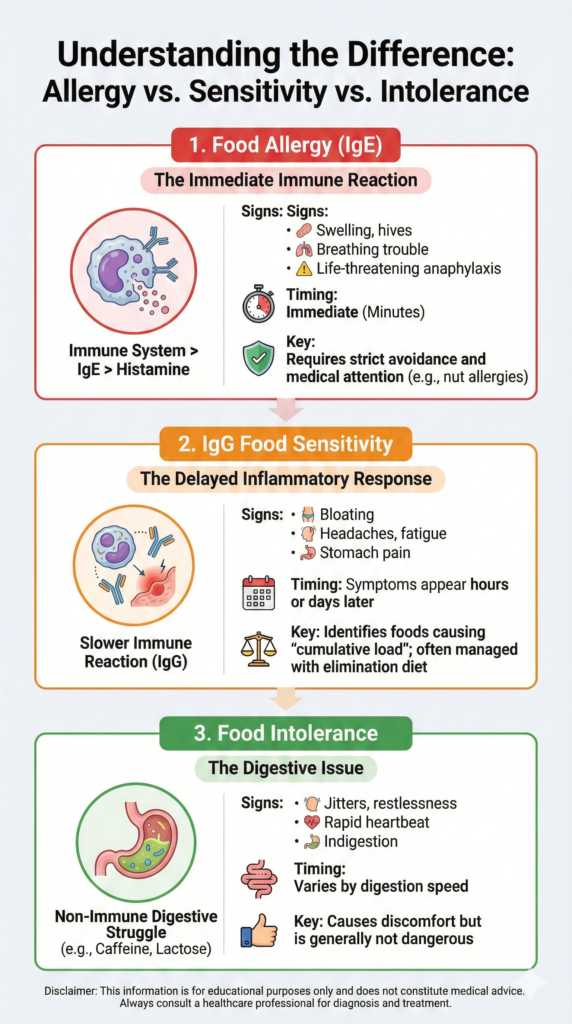
This is the most critical distinction to understand before buying a kit. A food allergy is an immediate immune system reaction that can be severe or even life-threatening, such as anaphylaxis. An intolerance or sensitivity, however, is typically a digestive or chemical response. It is not life-threatening but can lead to uncomfortable, chronic symptoms like bloating, fatigue, headaches, or skin inflammation that appear hours or even days after exposure. The kits on this page specifically test for these non-life-threatening sensitivities, not IgE allergies.
How does hair analysis work for testing sensitivities?
Unlike traditional blood tests that look for antibodies, these at-home kits typically utilize Bio-resonance or Bio-energetic technology. Upon receiving your sample, the lab scans the electromagnetic signals of your hair against a digital database containing the frequencies of thousands of food and environmental items. The test identifies which items create a reaction or imbalance in your sample, highlighting them as potential triggers for your symptoms.
Can I use these tests to diagnose a medical condition?
No, these tests are intended to be used as wellness tools rather than diagnostic medical devices. They are designed to guide you toward potential triggers so you can effectively structure an elimination diet. By temporarily removing the flagged items from your routine, you can observe if your symptoms resolve. If you suspect you have a serious medical condition or a severe allergy, you should always consult with a licensed healthcare provider.
Why is hair used instead of blood?
Hair is frequently used for sensitivity testing because it acts as a stable record of the body’s energy and exposures over a longer period of time, typically the last three months. While a blood test provides a snapshot of your body at the exact moment the blood is drawn, hair analysis offers a broader look at chronic patterns. Additionally, hair testing is completely non-invasive, pain-free, and much easier to collect and ship from home compared to blood samples.
How long does it take to see results?
One of the main advantages of hair analysis is the speed of the process. Once the lab receives your sample in the mail, they process it quickly. Most companies upload your comprehensive report to a secure online portal within just two to four days, allowing you to take action on your results almost immediately.